
Inside Farmington’s Directory Shelf
Farmington’s city directory shelf is local, regional, and partly digital. The Farmington Room describes Farmington, Unionville, and surrounding-town directories from 1907 through 2006, with the largest run in the late 1920s through late 1970s. It does not publish every year or publisher, so the verified span is more useful than a guessed annual list. Hartford regional volumes add earlier comparison points.
| Collection | Years Verified | Publisher | Where Held | Access and Use |
|---|---|---|---|---|
| Farmington and Unionville directories | 1907-2006; bulk late 1920s-late 1970s | Not specified by year | Farmington Room | Person-to-address and reverse address searching; ask staff about gaps |
| Hartford regional city directories | 1894, 1896, 1899, 1903, 1904, 1909 examples | Geer’s and other regional publishers | Google Books and State Library context | Regional names, addresses, occupations; local entry must be verified |
| Farmington Valley Herald | 1894-1975 | Farmington Valley Herald / Journal and Herald | Advantage Preservation and Farmington Room | OCR and browsing for notices, obituaries, people, and places |
| Historic-home files | 1940s-1980s survey material | Varied survey and collection sources | Farmington Room and CTDA | Address, former owner, builder, photograph, and architecture clues |
| Yearbooks and oral histories | Yearbooks approx. 1924-2024; oral histories roughly 2008-2014 online | School publications and oral-history contributors | Library, CTDA, and local institutions | School names, photographs, organizations, and first-person context |
The public collection notes do not claim a complete run for every year, and they do not assign a publisher to each volume. Treat a missing year as a question for the Farmington Room, not as proof that no directory was printed. The Farmington Room offers Wednesday and Thursday research hours from 10 a.m. to 1 p.m.; advance contact is recommended.
Farmington Room Directory Research
The Farmington Room is the main local history gateway for a city directory search. Its holdings include town and village histories, genealogies, biographies, scrapbooks, local newspapers, yearbooks, oral histories, photographs, and house-history material. Research is offered Wednesday and Thursday from 10 a.m. to 1 p.m. at the library, with staff contact at 860-673-6791 ext. 5213 and localhistory@farmingtonlibraries.org. Mail is addressed to the Farmington Room at 6 Monteith Drive, Farmington, CT 06032.
Extensive genealogy and reference assistance is listed at $25 per hour. Digital photography is generally allowed, but duplication and conservation rules still apply. Contact the room before relying on a shelf, microfilm reader, or a staff-assisted surname search.
The Farmington Room collections listing is the source for the holdings shown in the image.
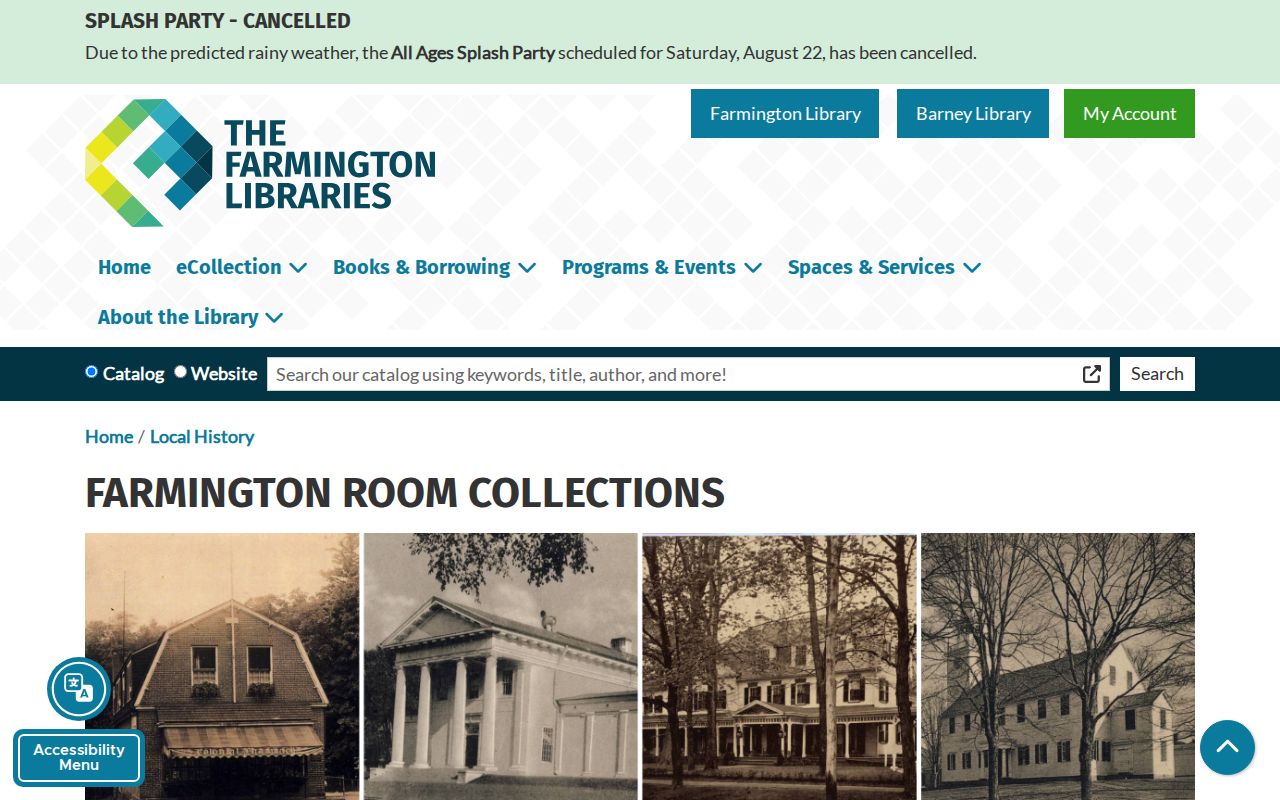
The collections image shows why the historical route is broader than a single directory volume, with house files, newspapers, school material, and local records in the same research room.
Farmington Herald People Records
The digitized Farmington Valley Herald and Journal/Herald run covers 1894 through 1975. Advantage Preservation offers a search mode described as finding people, places, and events, plus decade browsing. The public collections include 820 pages for the 1894-1901 Herald and Journal segment and 50,367 pages for the 1908-1975 Farmington Valley Herald segment. OCR can be imperfect, so a result should be read in its page image.
Newspaper notices can fill a gap between directory years. Look for a move, sale, death notice, civic role, school event, business item, or family announcement. Copy the date, page, place, and surrounding context. A newspaper name hit places someone in a public story, not necessarily at a current Farmington address.
The archive’s search and browse tools are a useful companion to city directories because they can explain why a name appears in one volume and disappears from the next.
Farmington Historic-Home Records
The Farmington Room collections page identifies the Hurlburt/Lewis File of Farmington Homes, the Prentice Collection, the Greater Middletown Preservation Trust survey, and address-based historic-home entries from the 1940s through the 1980s. These files can connect an address to an architectural description, builder, former owner, photograph, map, or preservation survey. They are especially useful when a modern parcel card changes but the house remains the same.
Selected Prentice material is searchable through CTDA, while local staff and the room remain the safest way to test the full file. Pair a house-history note with a deed, directory, map, or newspaper date. A historic owner is not automatically the only past occupant, and a preservation file is not a modern ownership record.
The Farmington Historical Society entry point supplies the local institutional context for these house files.
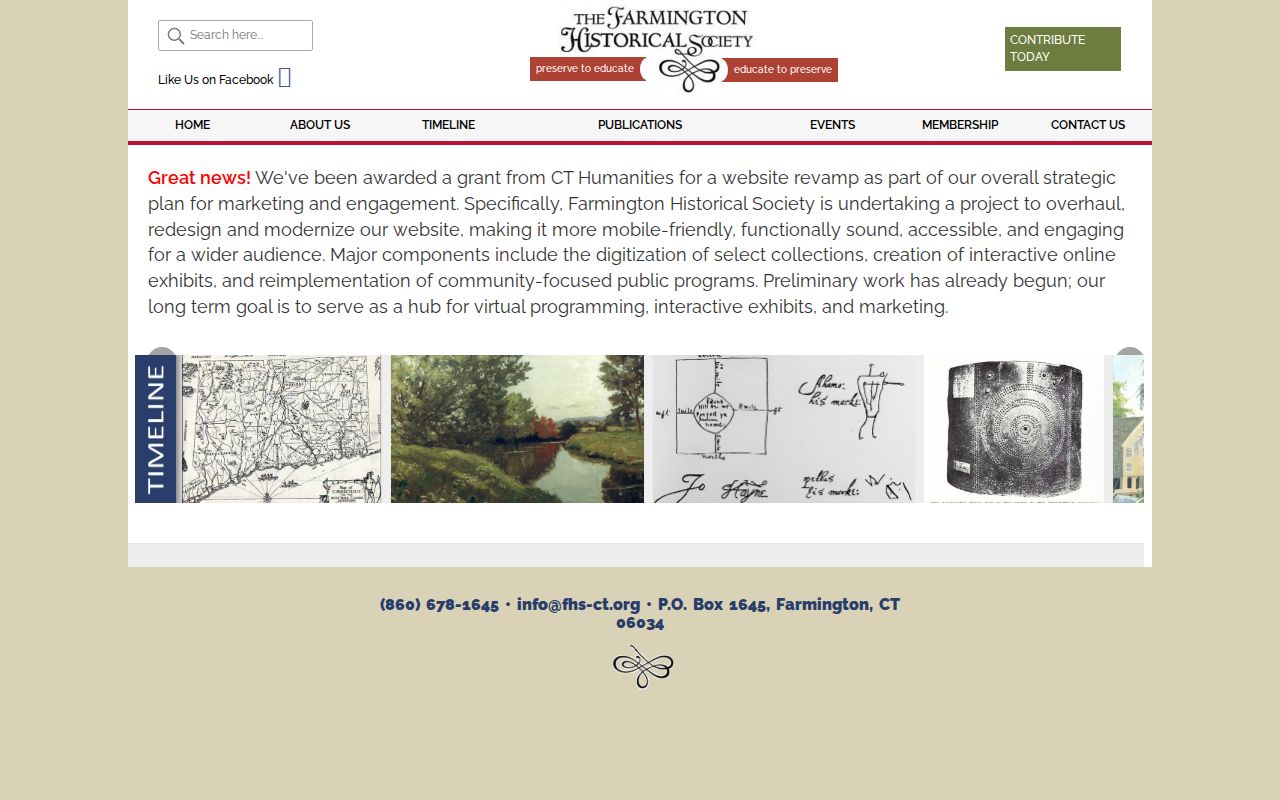
The historical collections image belongs with address research because the house file can supply place detail that a directory line leaves out.
Farmington Yearbooks and Directory Years
Farmington High yearbooks run approximately from 1924 through 2024, with some volumes digitized or cataloged through CTDA. A yearbook can supply a student name, class, photograph, activity, or school relationship. Use the graduation year as a time anchor, then compare the person with a later obituary, newspaper item, business filing, credential, or family record.
Unionville has its own place memory through the Unionville Museum, whose collection includes photographs, postcards, ephemera, mill and Upson Nut material, and high-school yearbooks. The village’s post-office label was adopted in 1834, so a city directory search should test both Farmington and Unionville wording when an address or person appears to shift.
The Unionville Museum collection is a place-specific companion, not a substitute for a city directory. Read the local volume for the exact page and notation.
Farmington Obituary and Biography Records
The Farmington Room holds obituary and biography vertical files, newspaper files, genealogy papers, and pamphlets. The public site does not expose one complete name-searchable obituary database or a fixed date run. Ask staff for a surname, date range, place, and likely relationship. The digitized Herald is the strongest public newspaper route, but OCR and page access still need checking.
An obituary can close a directory trail by naming a spouse, parent, former address, organization, or cemetery. Probate can add an estate or fiduciary connection. Neither source should be used to publish a private address or to merge two people on a surname alone.
Farmington Research Beyond City Directories
The Connecticut State Library genealogy guides cover probate, directories, census, town records, maps, cemeteries, naturalization, military material, and old-house research. Current notices say some archival material is offsite for compact shelving, so confirm access before traveling. FamilySearch’s Barbour Collection catalog includes Fairfield and Farmington material for 1645-1850, but older compiled entries should be checked against the town or church record.
The Farmington Historical Society preserves town documents, artifacts, newspapers, photographs, and genealogy. Its research-center notice names the Titcomb House and Natalie Ben Butler Community Research Center and lists Friday hours from 10 a.m. to 2 p.m. The Society and the State Library are complementary: one supplies local memory, the other supplies broader Connecticut finding aids.
The State Library genealogy guide is the source linked to the research image.
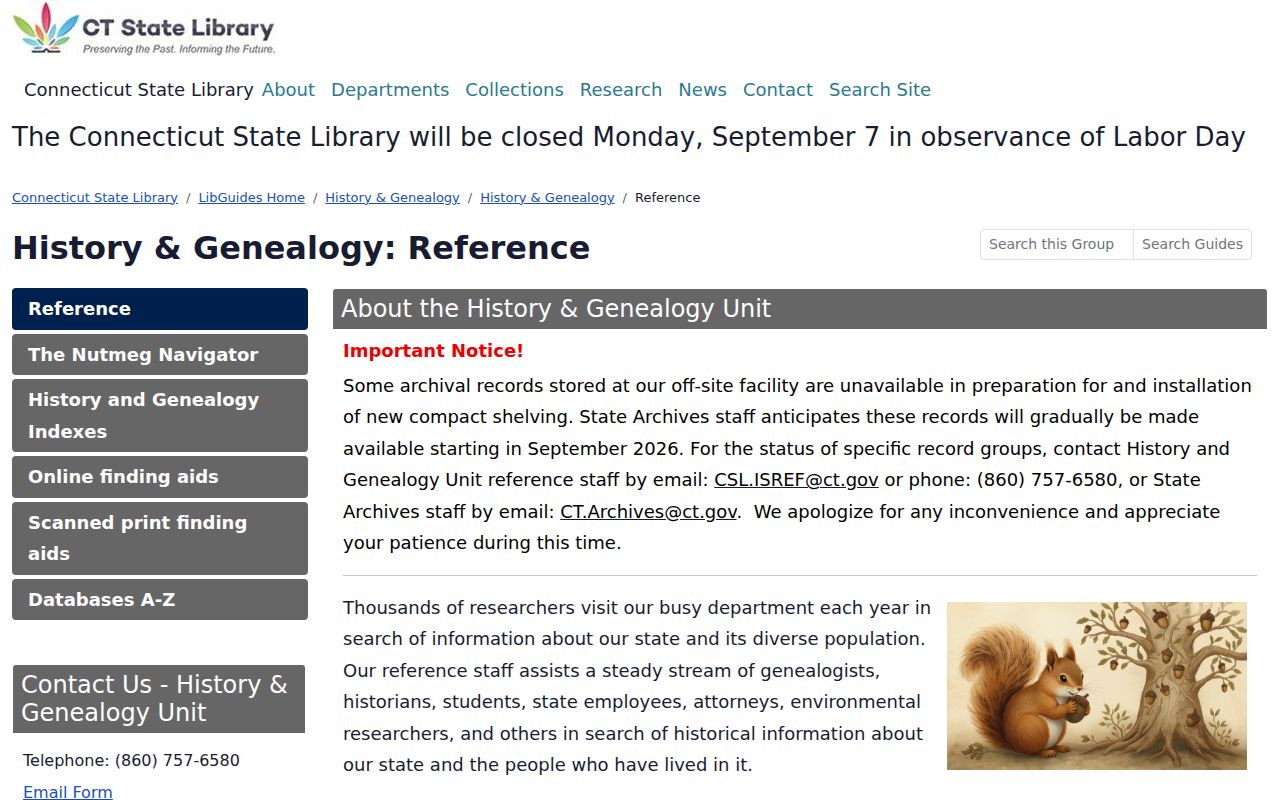
The guide image represents the cross-check layer, where a local directory entry can be paired with probate, census, map, or town-record material.
Farmington Directory Years to Verify
The verified local collection span is 1907-2006, but the public library descriptions do not enumerate every volume, publisher, war-year pause, or missing year. Do not fill those gaps with a guessed publisher. Instead, ask the Farmington Room for the exact shelf call number or year, and note whether the volume is a Farmington, Unionville, surrounding-town, or Hartford regional directory.
Use a dated Hartford volume such as Geer’s 1894 directory only as a regional comparator. Pair the local page with the nearest federal census available under the 72-year public-release rule, a grand list, deed, obituary, or newspaper. A transparent gap is better evidence than a precise year that the collection does not verify.
| 1907 | Earliest year in the Farmington Room’s described local directory span. |
|---|---|
| Late 1920s-late 1970s | Largest portion of the described Farmington and Unionville run. |
| 2006 | Latest year in the verified span, not proof of a final printed volume or complete annual run. |
The 1894 Geer’s Hartford City Directory record provides the dated regional comparison.
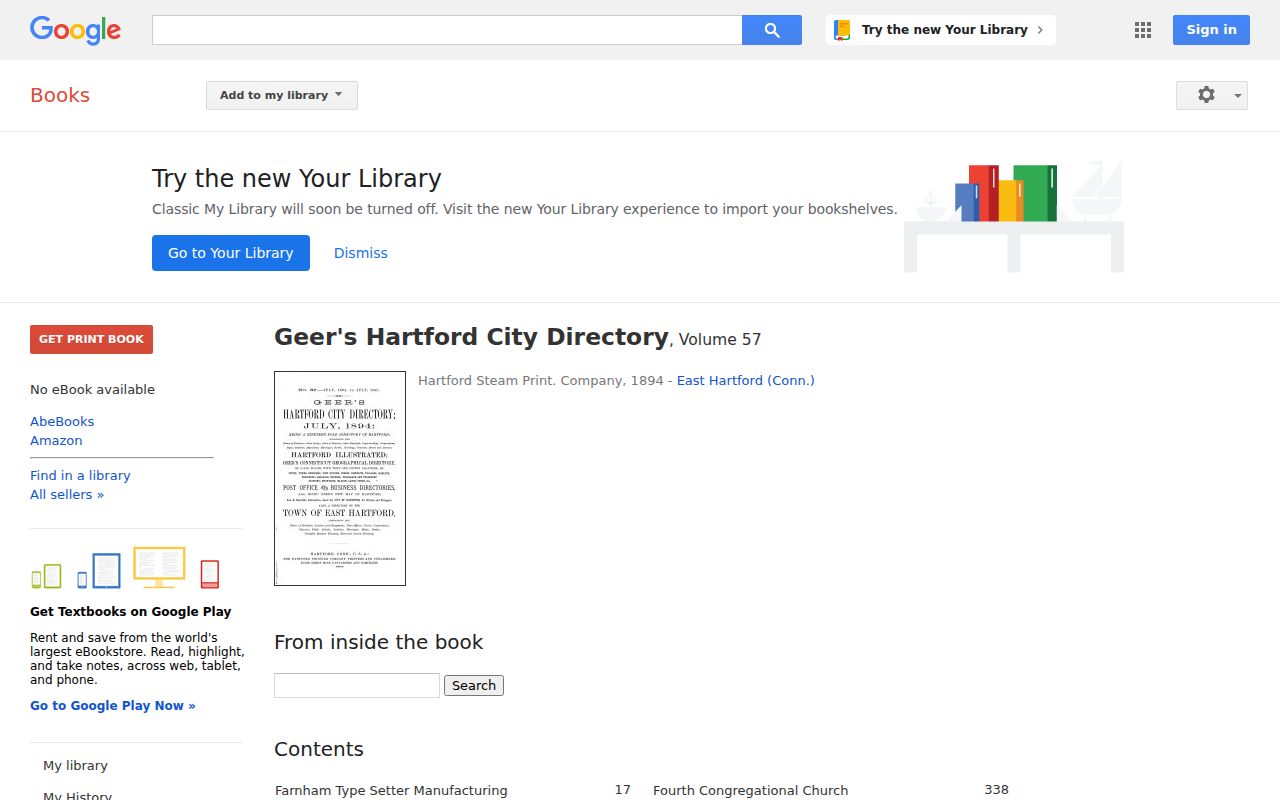
The regional comparator image shows the kind of dated volume that can help interpret a local shelf without replacing local verification.
Read a Farmington City Directory Entry
A city directory entry is a dated snapshot. The local shelf’s exact abbreviation key must be read in the volume, because symbols and short forms can change between publishers. A regional comparator, Geer’s Hartford City Directory from 1894, shows the expected pattern: surname and given name, street address, occupation or business role, abbreviated employer text, and household notation. The public inspection did not isolate a complete Farmington entry, so local page details should be confirmed in person.
| Name | Surname and given name, with a spouse or widow notation when the volume prints one. |
|---|---|
| Address | House number and street, sometimes with a village or postal label. |
| Occupation | Work or business role, often shortened through the publisher’s abbreviation key. |
| Household mark | A symbol or note may distinguish a residence, boarder, owner, or other printed status. |
| Cross-reference | The alphabetical section can be checked against a street-order or criss-cross section. |
- Criss-cross directory
- The street-order half of a directory, used to move from an address to a printed name.
- Householder index
- A name-led list that helps find a person, household, or address in the volume.
- Abbreviation key
- The publisher’s explanation of short occupation, relationship, residence, and household marks.
Use Farmington City Directories for Family History
For a household trail, begin with the address and year that are known. Search the street-order section if available, copy the name and printed notation, then move to the alphabetical section. Follow the person through the next annual or available run. A directory gap can mean a move, death, a change in household, an unlisted entry, or a missing volume. A census, deed, obituary, probate case, or newspaper notice can separate those possibilities.
- Find the person or address in the closest Farmington or Unionville directory year.
- Copy the spelling, house number, street form, occupation, spouse or widow note, and symbol exactly.
- Search the name section and then the next one or two available volumes for a move or changed household.
- Pair the directory year with the closest public federal census, town grand list, deed, tax card, or yearbook.
- Use the Farmington Valley Herald, obituary files, cemetery index, or probate search to test a disappearance.
The library’s reverse-directory method works especially well for one address over time. It does not make every printed name a current contact. Record the date and source page, and treat the entry as historical evidence.