
Tracing Farmington’s Previous Residents
Researching previous residents starts with the address, then moves through sources that cover different eras. A deed chain can show legal owners. A reverse directory can place a household at a street number. A census can show household composition at a ten-year point. Newspapers, permits, historic-home files, and probate can explain a move or close a trail. No single source fills every gap.
| Source | Local Coverage | Where Held | What It Shows |
|---|---|---|---|
| Town Clerk legal series | Mid-1600s to present stated; internet land records documented from 1961 | Town Clerk / RecordHub | Deeds, mortgages, maps, liens, easements, and legal chain |
| Assessor and property cards | Current; 2022 revaluation; 2026 revaluation underway | Farmington Assessor | Owner, situs, mailing line, use, value, sales and building fields |
| Farmington and Unionville directories | 1907-2006; bulk late 1920s-late 1970s | Farmington Room | Person-to-address and reverse address-to-person entries |
| Farmington Valley Herald | 1894-1975 digitized | Library archive | Moves, deaths, sales, organizations, family and community notices |
| Federal census | Public through 1950 under the 72-year rule | NARA and library databases | Household composition at census dates |
| Building permits and GIS | Historic permits before 2017 stated updated; 1934 aerial through current map layers | Town Building Department / GIS | Construction chronology, parcel change, and physical context |
| Probate and obituary files | Probate online from Jan. 5, 2011; older and newspaper coverage varies | PD-10, Farmington Room | Heirs, fiduciaries, death dates, family links, and endpoints |
Use the current parcel and deed for a recent owner, the library shelf for a twentieth-century household, and a town or state archive for older material. The dates describe known coverage, not a promise that every year is complete.
Start With Farmington Parcel Records
Normalize the address before searching previous residents. Write the street spelling, number, unit, postal city, ZIP, parcel ID, MBL, and any subdivision or condominium name. The Farmington Assessor property card can supply current owner, situs, mailing address, use, year built, value, and sales or building context. GIS can then confirm the parcel shape and the lots around it.
Keep the tax mailing line separate from the physical situs. A mailing address can be elsewhere, and a current owner can be an entity. The parcel identifier and legal description are better anchors than a name alone when the address has changed.
Use Farmington RecordHub Records Carefully
Farmington promotes RecordHub Property Check as a property-fraud alert. After account setup, a user can monitor an exact name or a starts-with letter notification. The registrant controls changes, deactivation, and deletion, while the Town Clerk does not perform the search. The alert tells an owner that a document was recorded under a monitored name. It is not a title guarantee and does not list every person at the property.
For house history, treat an alert as a dated prompt to inspect the recorded instrument. Record the document number, party names, deed or lien type, and parcel reference, then confirm the image or certified copy through the Town Clerk.
Farmington Online-Image Records Since 1961
The Town Clerk says Farmington’s legal land-record series reaches back to the mid-1600s. A 2017-18 official annual report documented land records from 1961 to the present on the internet and described re-indexing that added earlier years. Current RecordHub coverage before 1961 was not directly verified in the live interface.
That distinction changes the next step. A current online image can support a recent chain, but a missing result before the documented line should lead to Town Clerk deed books, microfilm, map copies, certified copies, the Connecticut State Library, or a historical society. Do not call 1961 the beginning of Farmington’s legal records.
Pair Farmington Deeds and Directory Years
A deed interval tells who held a legal interest. A city directory tells who was printed at an address for a particular year. Put the two dates on one line, then add a census, grand list, tax card, permit, or newspaper. The Farmington and Unionville directory collection spans 1907-2006, with the bulk in the late 1920s through late 1970s. The public shelf does not verify every year or publisher.
A dated Hartford comparator such as Geer’s 1899 volume can show how regional entries were arranged, but it is not a substitute for a Farmington local page. Copy the exact address and notation before deciding that two names represent the same household.
The 1899 Geer’s Hartford City Directory source is the regional comparator shown here.
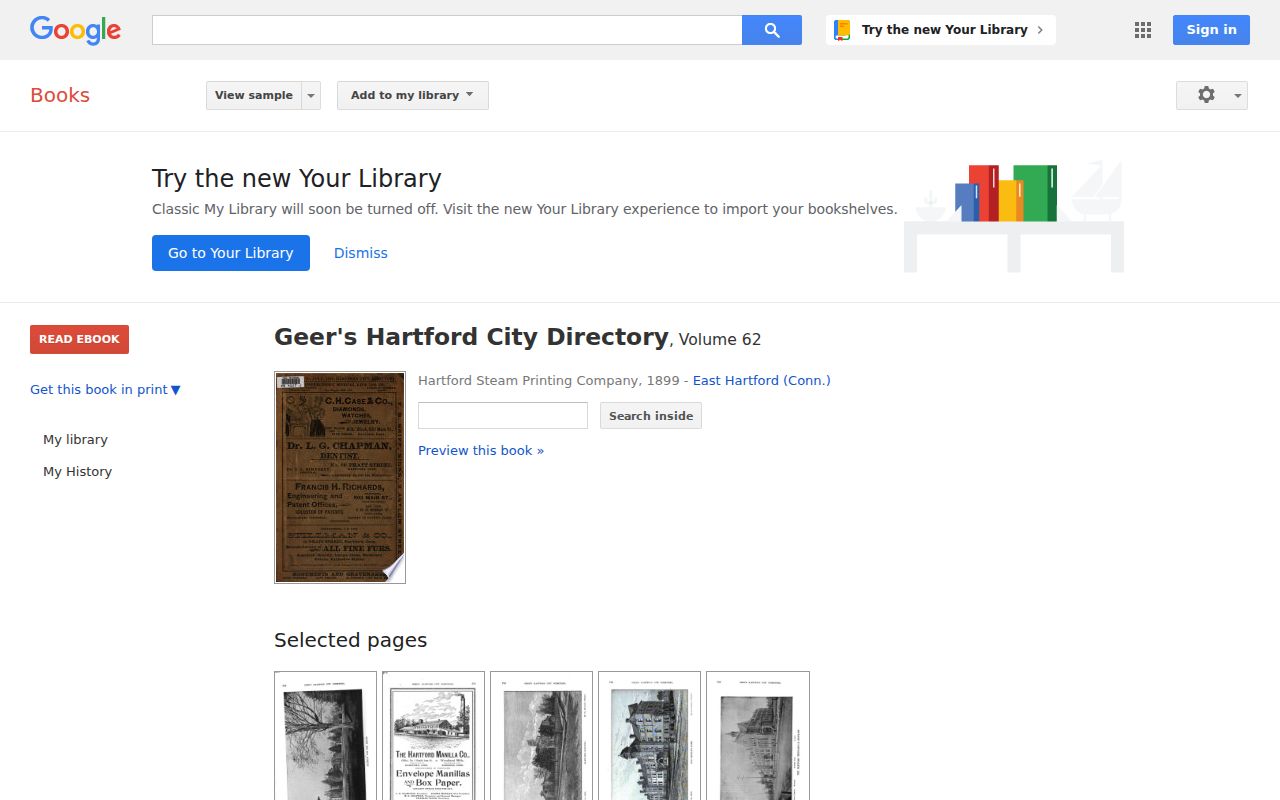
The regional directory image is a method reference for the backward trail, not a claim about a particular Farmington household.
Farmington Herald, Obituary, and Probate Records
The Farmington Valley Herald is digitized from 1894 through 1975 and can be searched for people, places, and events. Search a surname with a street, village, business, church, school, or family term. A move, sale, death notice, civic item, or estate notice can explain why a name leaves a directory.
Probate PD-10 covers Farmington, Burlington, and Plainville. The online case lookup starts with January 5, 2011 data, while older material needs a court or library route. An obituary or case index is an endpoint for identity work, not permission to publish a fiduciary or family address.
Farmington Room House-History Records
The Farmington Room holds the Hurlburt/Lewis File of Farmington Homes, Prentice Collection, preservation surveys, historic-home entries from the 1940s through the 1980s, maps, photographs, newspapers, and local genealogy papers. A file may name a former owner or builder, describe the structure, or preserve an image of the place before a later subdivision or renovation.
Ask staff about the address, known owner, village label, and approximate year. The Connecticut State Library old-house guides add maps, historic-resource surveys, HABS, National Register, and CT History Online routes. Neither collection promises an unlimited search, so confirm hours and duplication rules.
Farmington Postal and Address Records
Farmington and Unionville can describe one legal town in different ways. Subdivisions, parcel splits, street naming, and house-number changes can break a simple address search. Older directories may print Unionville where a deed says Farmington. A current ZIP may not resemble the postal label used in a newspaper or directory year.
Bridge the gap with the MBL, unique ID, legal description, map, neighboring owner names, historic-home file, and the 1934 GIS aerial. A similar street name is not enough. The parcel and legal record should carry the decision.
Farmington Grantor and Grantee Records
Farmington’s Town Clerk is the local recorder equivalent. The town describes its land-record series as reaching back to the mid-1600s, but the official internet coverage documented in a 2017 report begins at 1961 and earlier image coverage was not separately verified. Use RecordHub for the current online route, then switch to deed books, microfilm, certified copies, the State Library, or the Historical Society when the online trail ends.
- Pull the current Farmington owner, situs, MBL, unique ID, sales history, and legal description from the Assessor.
- Find the latest acquisition deed in the Town Clerk’s RecordHub index and open the image when available.
- Record the grantor, grantee, deed type, date, consideration, volume and page or instrument number, and legal description.
- Search the grantor as the earlier grantee, follow the referenced prior deed, and test the parcel or map each time.
- At the online cutoff, ask the Town Clerk for the next book, map, microfilm, or certified-copy route instead of guessing.
- Grantor and grantee
- The grantor conveys an interest; the grantee receives it in the recorded instrument.
- Chain of title
- The linked sequence of recorded transfers that explains how a legal interest moved backward through time.
- Legal description
- The deed’s lot, map, subdivision, or metes-and-bounds language, which can identify land when a street number changed.
The Farmington RecordHub source is the online gateway represented in the ownership image.
The RecordHub image belongs at the start of the ownership trail, before an older deed requires a different access channel.
Past Farmington Households and Directory Records
Ownership is only one layer of previous residents. A reverse directory can name the person printed at a street number, while a census can show the household counted at a date. Pair the closest directory year with the nearest public census, then compare the address, names, ages, occupations, and family links. The directory collections and reading method are covered on the Farmington city directory page.
Use this flow: address and year → reverse directory → alphabetical entry → nearest census → deed or grand list → newspaper, obituary, or probate. If the name disappears, test a move, death, unlisted entry, house-number change, or missing volume. Do not treat a blank year as proof that the building was empty.
- Copy the directory’s spelling, street form, house number, spouse or widow note, occupation, and symbol.
- Find the closest federal census and compare the household, age, relationship, and place fields.
- Use the deed, grand list, tax card, or permit to connect the household to the parcel without equating ownership and occupancy.
- Search the Herald, obituary file, cemetery index, or probate record for a move, death, or heir connection.
The Farmington Room obituary and biography research source is represented in the final image.
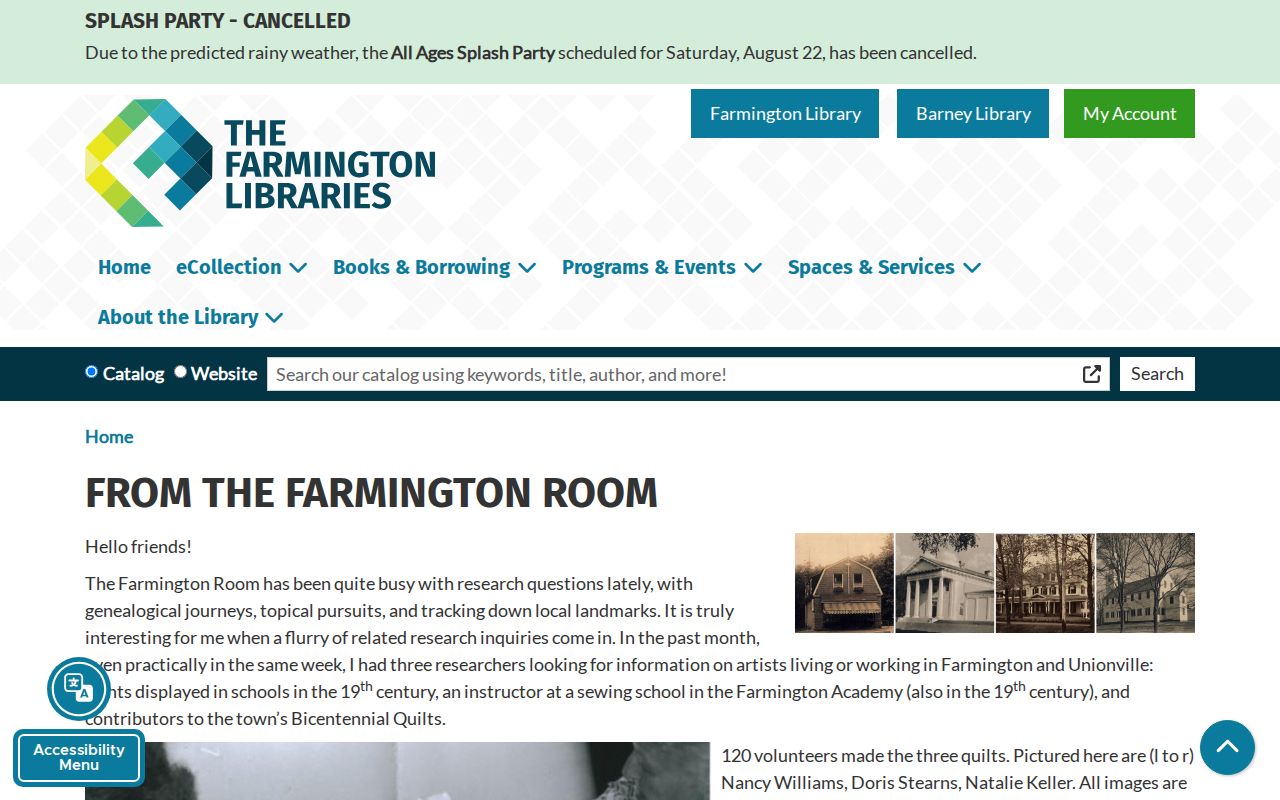
The obituary and biography image shows how a past household trail can end in a staff-assisted local-history file instead of a current address.
Lawful use. Previous-resident research is for house history, family history, estate work, and personal curiosity. Do not use a historical record to harass, track, or repeatedly contact a living person.